 N環球

Looking at today’s Xinjiang and Tibet from Canadian boarding schools
2026-10-12
Hello everyone, my name is Yang. This is the first article after "Yang Shuo" was converted into a text version.
I saw the news some time ago that China is vigorously promoting Mandarin in Xinjiang and Tibet, and children are increasingly unable to learn their mother tongue in school. This reminds me of a topic I’ve always wanted to talk about: Aboriginal residential schools in Canada’s history.
I have lived in Canada for so many years and have a general understanding of this period of history, but I only carefully checked many of the details when I wrote this article. If there is something wrong, please correct me.
1. What has Canada done?
Back in the second half of the 19th century. In 1879, the Canadian government sent people to the United States to inspect Indian boarding schools. They came back with a "Darvin Report" and recommended that Canada do the same - take Aboriginal children away from their parents, concentrate them in boarding schools, and teach them in English (or French), with the goal of "assimilating" them into white society. Indian affairs officials at the time put it very bluntly: Our goal is to make the "Indian problem" disappear.
In 1883, the first boarding schools opened. In 1884, the Indian Act was revised, and subsequently increased several times, to force Aboriginal children to attend school, and parents who did not send their children to school would be punished.
These schools are "education" in name, but they are actually machines of cultural genocide: children are not allowed to speak their mother tongue as soon as they enter school, and are punished corporally if they do; their long hair is cut off, their traditional clothes are changed, and their aboriginal names are changed; the curriculum is mainly manual labor, and there are very few real cultural classes; the schools are run by churches and the government allocates funds on a per capita basis. When the allocation is insufficient, the schools try their best to recruit more students, resulting in overcrowding, malnutrition, poor hygiene, and rampant tuberculosis.
2. Price: 150,000 children
Over more than 100 years, approximately 150,000 Aboriginal children were sent to these schools. The Truth and Reconciliation Commission confirmed that at least 3,200 children died in schools—from illness, freezing, or accidents while escaping. The actual number is only higher because many schools have incomplete records.
Many of those who survived were also ruined: physical abuse and sexual assault were common; they were completely isolated from their parents, tribe, language, and culture, and a generation lost the ability to be parents—because they themselves grew up in institutions without love. This trauma is passed down from generation to generation and is still there today.
3. Admit mistakes: closure, apology, compensation
In 1969, the federal government issued a "White Paper" that wanted to simply abolish the special status of Aboriginal people and "treat all people equally." However, it encountered strong opposition from the Aboriginal people and had to give up. This shows that the path of assimilation is fundamentally wrong.
In 1996, the last residential school (Gordon School in Saskatchewan) closed. More than a century of boarding school is officially over.
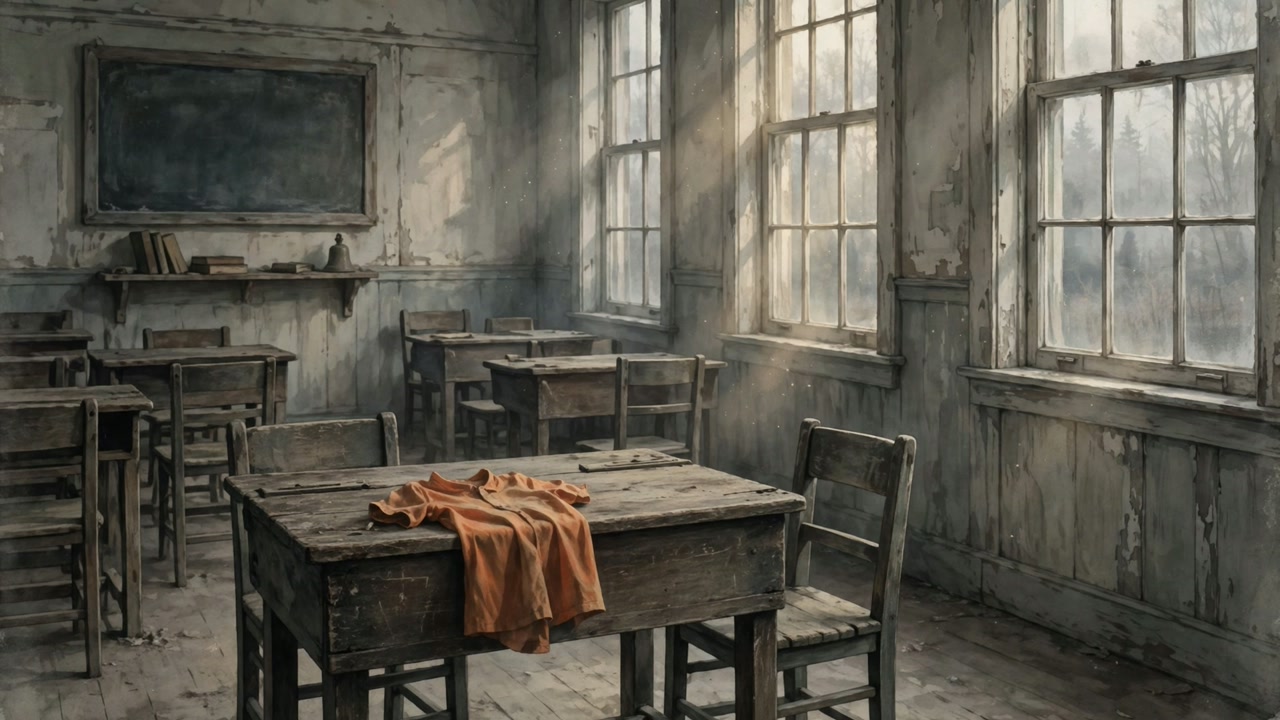
Afterwards, Canada did several major things: In 1998, the government issued a "Reconciliation Statement", formally admitting its mistakes for the first time; in 2006, the "Indian Residential School Settlement Agreement": 1.9 billion Canadian dollars in compensation, survivors were compensated according to the years of victimization, and a special procedure was established to handle abuse claims; on June 11, 2008, Prime Minister Harper formally apologized in Parliament, and the entire process was broadcast live on television; from 2008 to 2015, the Truth and Reconciliation Commission heard 6750 cases across the country. Based on the testimonies of two survivors, a report was released in 2015 and put forward 94 "calls to action" covering all aspects of education, medical care, justice, language and culture; since 2013, September 30th every year is "Orange Shirt Day"; in 2021, 215 unmarked graves were discovered at the Kamloops boarding school site, which shocked the country. In the same year, September 30 was designated as "National Truth and Reconciliation Day" and became a federal statutory holiday - a national holiday not for celebration, but for remembering and reflecting.
4. Canada Today
Today in Canada, there is a complete set of supportive policies for indigenous peoples: the Ministry of Aboriginal Affairs has dedicated funds for education, medical care, housing, and entrepreneurship; there are biases in university admissions and civil service recruitment; the United Nations Declaration on the Rights of Indigenous Peoples Act will be passed in 2021; in 2022, the federal government reached a settlement agreement of CAD 40 billion on Aboriginal child welfare discrimination - the largest settlement in Canadian history.
Of course, Aboriginal communities still face many real issues today: drinking water on reserves, missing and murdered Aboriginal women, youth suicide rates...reconciliation is a long road. But at least the country admits: we were wrong and we are paying our debt.
5. Comparing Xinjiang and Tibet today
Let’s go back to the news at the beginning. According to a 2023 report by United Nations human rights experts, about 1 million Tibetan children are studying in boarding schools, and teaching is mainly in Mandarin. The space for the inheritance of Tibetan language and Tibetan culture has been severely compressed. The situation in Xinjiang is similar: after 2017, "bilingual education" has increasingly tilted towards Mandarin. According to multiple international media reports, the position of Uyghur in school education has continued to shrink, and a large number of Uyghur children have been sent to boarding schools, cut off from the language environment of their families.
Does the technique look familiar? In the name of "education", children are gathered together, their mother tongue is cut off, and their culture is cut off. That's what Canada did 140 years ago.
The difference is this: Canada did it for over 100 years before closing schools, apologizing, paying out money, and establishing a national holiday to remember this mistake. Today in China, similar things are happening, but there is no apology, no reflection, and even no discussion.
Conclusion
I am not writing this to say which country is good and which country is bad. Canada’s history just proves: forcing children to give up their mother tongue and cut off their cultural roots, no matter what the banner is, will eventually be proven wrong - so wrong that it takes a national holiday and a generation to reflect and repay.
Learn from history. If a mistake has been proven to be a mistake in other countries, those who are repeating it should at least stop and think about it.
My name is Yang. This is the first issue of the text version of "Yang Talks". If you have different opinions, please leave a message to discuss.