 N環球

Intel and Altera to develop sensor-bridge designs for physical AI in healthcare, aerospace and robotics
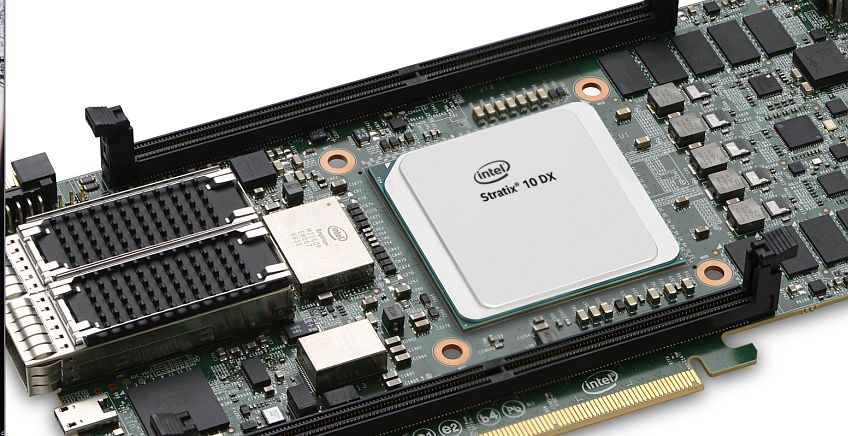
Intel and Altera announced on 10 November a collaboration to develop modular, real-time sensor-bridge reference designs, combining Intel compute, connectivity and software with Altera programmable chips for edge and physical AI uses including healthcare equipment, aerospace and defence mission systems and robotics.
Intel and Altera announced on 10 November a collaboration to develop modular, real-time sensor-bridge reference designs for edge and physical AI systems, targeting advanced healthcare equipment, aerospace and defence mission systems, and robotics. The companies said the designs will combine Intel's compute, connectivity and software with Altera's field-programmable gate arrays (FPGAs) to help equipment makers cope with increasingly sensor-rich edge environments.
Different sensor interfaces, data that must reach the processor fast
Edge and physical AI systems often have to consolidate sensors using different interfaces while satisfying timing, performance, power and cost constraints; some applications also demand very high bandwidth or place input/output connections away from the compute board. Dan Rodriguez, corporate vice president and general manager of Intel's Edge Computing Group, said the goal is to preserve manufacturers' flexibility as applications, sensors and workloads evolve, simplify integration, and help customers move from prototype to deployment while meeting performance, power and cost requirements.
Three application areas, with reference designs offered through SDKs
For healthcare, the companies are jointly developing a reference solution for the stringent latency and real-time demands of advanced equipment; for aerospace and defence, the focus is next-generation mission systems, particularly size, weight and power constraints for workloads that converge AI and signal processing; for robotics, Intel compute, connectivity and robotics software will be paired with Altera FPGAs to address sensing, timing and real-time processing in intelligent machines. The reference solutions are expected to be made available through Intel's Open Edge Platform SDK and an Altera SDK. Farhad Shafai, Altera's head of business solutions and marketing, said: "Physical AI systems have to sense, decide, and act in real time, and the physical world demands accuracy, reliability, and safety."
Still in development, with no specifications or launch date disclosed
What has been announced so far is a set of reference designs under development, not a finished commercial product; the companies disclosed no throughput, latency or power specifications and gave no date for the reference designs or SDKs. Altera is the largest pure-play FPGA provider; Intel acquired it for $16.7 billion in 2015 and sold a 51% stake to private equity firm Silver Lake last year. Sources: Business Wire, The Robot Report, 10 November 2026.
💬 Comments
No comments yet. Be the first!