 N環球
N環球 
North Korea identifies Wonsan launches as Hwasong-11Ma tests and claims hypersonic capability
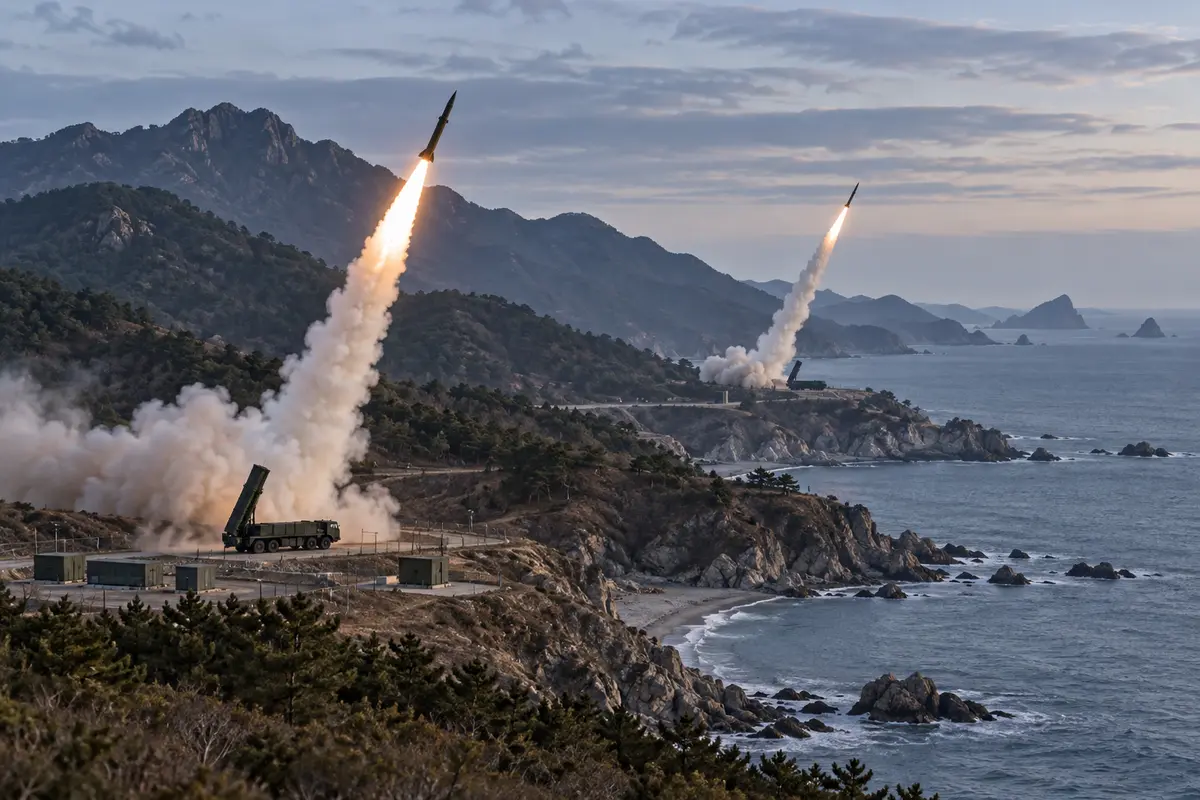
North Korean state media identified the two September 20 launches from Wonsan as tests of a Hwasong-11Ma weapon and claimed a maximum range of 908.2 kilometres at 2,146 metres per second. South Korea had measured about 450 kilometres and more than 600 kilometres; the claimed performance is not independently verified.
Korean Peninsula · Security · 2026.09.22 · 05:15 UTC
North Korean state media identified the two September 20 launches from Wonsan as tests of a Hwasong-11Ma weapon and claimed a maximum range of 908.2 kilometres at 2,146 metres per second. South Korea had measured about 450 kilometres and more than 600 kilometres; the claimed performance is not independently verified.
Why it matters
Pyongyang's first identification of the system and its performance claims are a material update, but they do not fully match South Korean measurements. Experts remain cautious about whether the weapon has demonstrated sustained hypersonic-glide capability, so N Globe treats that description as North Korea's claim.
Full report
North Korea's official news agency said on September 21 that Kim Jong Un observed the test of what it called a new Hwasong-11Ma weapon system launched from Wonsan on September 20. AP and Reuters reported the announcement; published photographs showed Kim attending with his daughter, Kim Ju Ae.
North Korea claimed the two weapons travelled at 2,146 metres per second and up to 908.2 kilometres before striking sea targets, and described the system as hypersonic. Those figures are official North Korean claims; N Globe has not found independently verifiable full-flight data.
South Korea's Joint Chiefs of Staff had confirmed two short-range ballistic missiles launched from the Wonsan area about three hours apart, measuring ranges of roughly 450 kilometres and more than 600 kilometres. The available record does not establish whether the difference from North Korea's maximum-distance claim reflects different flight segments, trajectory calculations or another cause.
Reuters reported that analysts viewed the photographed warhead shape as potentially consistent with a hypersonic glide vehicle, while AP cited experts who remained cautious about the performance claim. Reaching hypersonic speed alone does not demonstrate stable manoeuvring throughout flight, so this report does not present the capability as independently proven.
South Korea convened an emergency national-security meeting, while Japan said the earlier detected missile did not land in its territorial waters. No casualties were reported. The payloads, full trajectories, guidance performance and deployment status remain undisclosed.
Verification status: corrected/updated. South Korea's detection of two short-range ballistic missiles and North Korea's subsequent public identification are confirmed; 908.2 kilometres, 2,146 metres per second and hypersonic capability remain North Korean claims. News value: B-level. Origin region: Rest of Asia (North Korea). Primary section: War & military. Related regions: Asia, United States, China and World.
This report is an original summary based on verified sources, not a verbatim reproduction.
💬 Comments
No comments yet. Be the first!